


Choosing the Right Full Stack Framework in 2026
Selecting the correct technology framework can determine whether your software project ships on time and scales gracefully, or collapses under technical debt within the first year. With dozens of frameworks competing for developer attention, narrowing down the right choice for your specific project requires understanding the strengths, weaknesses, and ideal use cases of each major option. This guide compares 2026’s leading full stack frameworks to help businesses and developers make confident, informed decisions.
React and Node.js: The Industry Standard
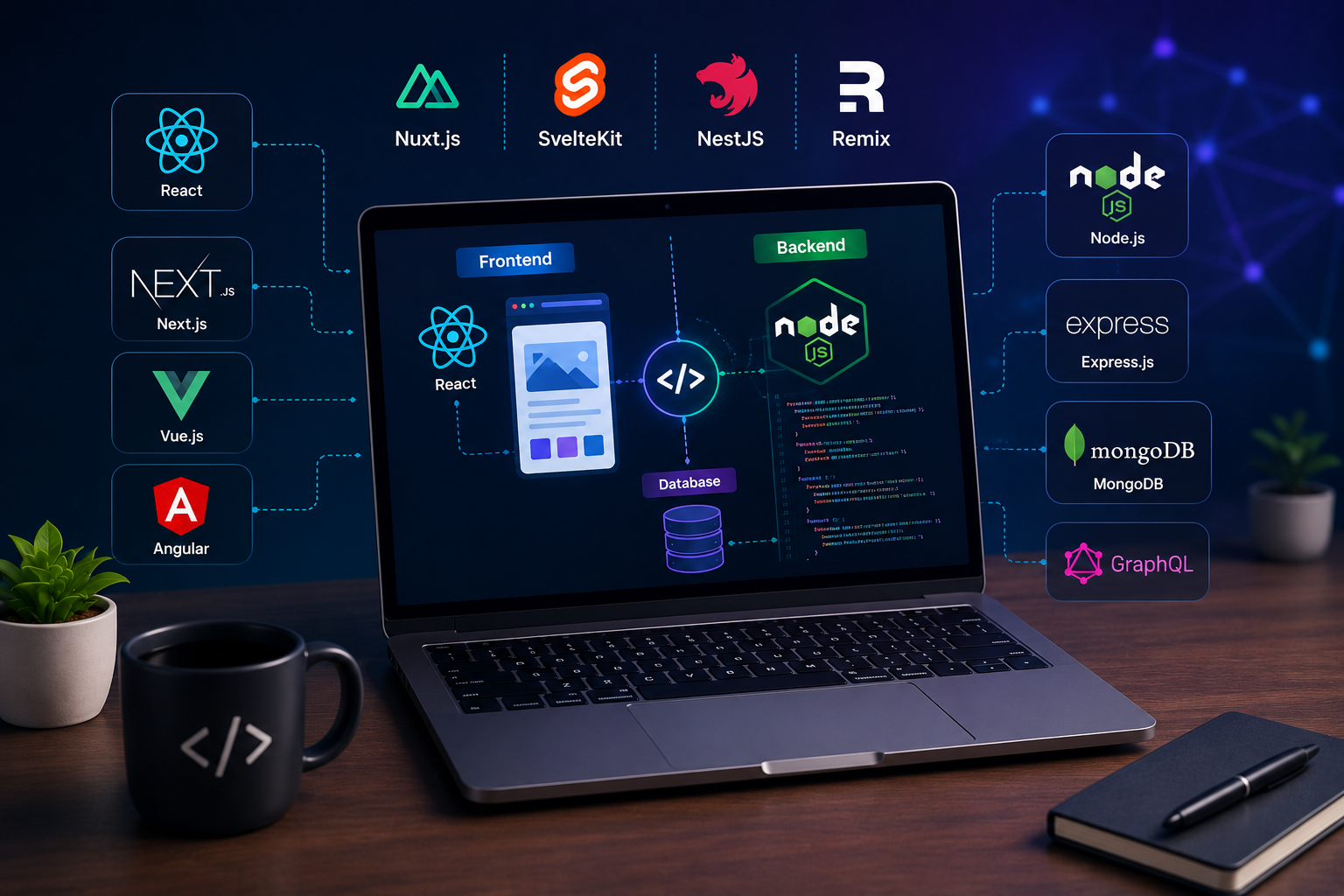
React, maintained by Meta, remains the dominant frontend library in the United States software industry. Combined with Node.js on the backend, the React-Node.js pairing creates a JavaScript-native full stack environment that has become the default choice for the majority of new web applications launched in 2026.
The primary advantage of this combination is talent availability. With millions of developers worldwide proficient in JavaScript, businesses building on React and Node.js rarely struggle to find qualified engineers. Additionally, the npm ecosystem provides an enormous library of pre-built packages, dramatically accelerating development timelines for common features like authentication, payment processing, and data visualization.
React’s component-based architecture also makes it exceptionally well-suited for applications requiring complex, interactive user interfaces. Companies building dashboards, social platforms, or real-time collaborative tools consistently choose React for its flexibility and performance characteristics.
Angular: The Enterprise Favorite
Google’s Angular framework continues to hold strong appeal among enterprise organizations, particularly those already invested in the Microsoft and TypeScript ecosystem. Unlike React, which is technically a library requiring additional tools to form a complete framework, Angular ships as a comprehensive, opinionated framework with routing, state management, and form handling built directly into the core package.
This opinionated structure appeals strongly to large engineering organizations that value consistency across teams. When every developer follows the same architectural patterns enforced by the framework itself, onboarding new team members becomes faster and code review becomes more predictable. Financial services companies, insurance providers, and government contractors frequently favor Angular for exactly these reasons.
Vue.js: The Developer Favorite for Rapid Development
Vue.js has carved out a dedicated following among developers who want React’s flexibility without its complexity, or Angular’s structure without its steep learning curve. Many startups and small to mid-sized companies choose Vue specifically because it allows smaller teams to ship features faster without sacrificing code quality or maintainability.
Vue’s gentle learning curve also makes it an excellent choice for teams with mixed experience levels, where junior developers need to contribute meaningfully without extensive ramp-up time. The framework’s official tooling, including Vue Router and Pinia for state management, provides everything needed for production applications without requiring developers to evaluate dozens of competing third-party libraries.
Django and Python: The Data-Driven Choice
For applications heavily integrated with data science, machine learning, or artificial intelligence capabilities, Python’s Django framework remains the preferred full stack solution throughout 2026. Python’s dominance in the data science and AI space means that companies building products requiring predictive analytics, recommendation engines, or natural language processing benefit enormously from using the same language across their entire technology stack.
Django’s “batteries included” philosophy provides built-in solutions for authentication, admin panel generation, and ORM database management, allowing development teams to focus on unique business logic rather than reinventing common infrastructure components.
Next.js: The Rising Full Stack Framework
Built on top of React, Next.js has rapidly become one of the most discussed frameworks in American full stack development circles. Next.js solves several pain points inherent to traditional React applications, including server-side rendering for improved search engine optimization and faster initial page loads, along with built-in API routes that eliminate the need for a completely separate backend server in many cases.
For companies prioritizing performance, SEO visibility, and rapid time-to-market, Next.js has become an increasingly common recommendation from leading full stack development companies across the country.
Ruby on Rails: Still Relevant for Rapid Prototyping
Despite predictions of its decline, Ruby on Rails maintains a loyal following, particularly among startups prioritizing speed over scale during their earliest development phases. Rails’ convention-over-configuration philosophy allows experienced developers to build functional prototypes in a fraction of the time required by more flexible but less opinionated frameworks.
How to Choose the Right Framework for Your Project
The right framework choice depends heavily on your specific business context. Consider your team’s existing expertise, the complexity and scale requirements of your application, your timeline constraints, and your long-term maintenance plans. Startups prioritizing speed might lean toward Vue or Rails, while enterprises requiring strict architectural consistency often favor Angular.
For most American businesses in 2026, React combined with Node.js or Next.js represents the safest default choice given talent availability and ecosystem maturity. However, the best decision ultimately comes from consulting with experienced full stack development professionals who can assess your specific technical and business requirements.
Browse our directory of verified full stack development companies to connect with engineering teams experienced across all major frameworks, ensuring your project starts with the right technical foundation from day one.
Svelte and Emerging Frameworks Gaining Momentum
Beyond the established players, newer frameworks like Svelte are gaining meaningful traction among performance-conscious development teams. Unlike React and Vue, which perform much of their work in the browser, Svelte shifts this work to compile time, resulting in smaller bundle sizes and faster runtime performance. While adoption remains smaller compared to React or Angular, an increasing number of American startups are experimenting with Svelte for performance-critical applications.
Similarly, frameworks like SvelteKit and Remix are pushing the boundaries of what full stack JavaScript frameworks can accomplish, offering improved developer experience alongside genuine performance benefits that matter for user retention and search engine rankings.
Database and Infrastructure Considerations
Framework selection represents only one piece of the full stack puzzle. Database choice significantly impacts application architecture, with relational databases like PostgreSQL remaining the standard choice for applications requiring complex relationships and strict data consistency, while NoSQL options like MongoDB offer flexibility for applications with rapidly evolving data structures or massive horizontal scaling requirements.
Cloud infrastructure decisions similarly affect long-term framework viability. Organizations committed to AWS, Azure, or Google Cloud Platform should evaluate framework compatibility with their preferred cloud provider’s serverless offerings, managed database services, and deployment tooling to ensure smooth long-term operations.