
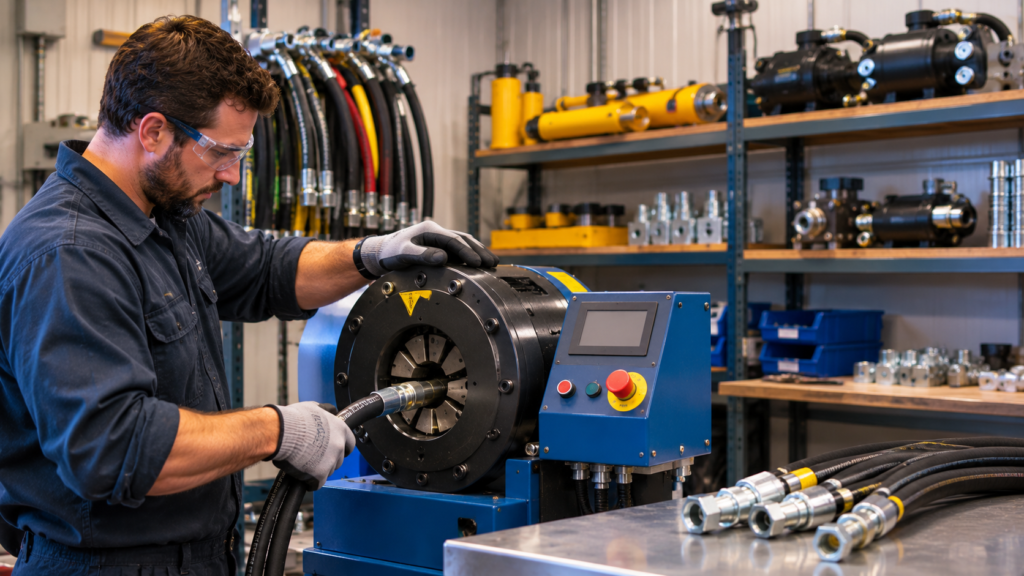
When a hydraulic line bursts on a production floor, a press loses pressure, or an excavator stops moving, the clock starts. Every hour of downtime costs money, and the company you call first often decides how long the problem lasts. That is why choosing a hydraulic systems company is worth doing before something breaks, not after.
This guide is written for plant managers, maintenance teams, fleet operators, OEMs, and marine and construction businesses in the USA, Canada, and the UK. You will learn what a hydraulic systems company does, the main types of provider, the standards and certifications that matter, a nine-step selection process, what drives cost, red flags to avoid, and the questions to ask before you hire. You will also see hydraulic companies listed on Engineers Mirror.
What Does a Hydraulic Systems Company Do?
A hydraulic systems company supplies, repairs, and designs the equipment that uses pressurized fluid to move machinery. Depending on the provider, services can include:
- Repair and rebuild. Pumps, motors, cylinders, and valves.
- Hydraulic hose assemblies. Custom hoses built to your specification, plus replacement and on-site hose repair.
- Tube fabrication. Bending, flaring, and forming steel tubing for specific layouts.
- Components and distribution. Valves, pumps, motors, manifolds, adapters, couplings, and accessories.
- Hydraulic power units and system design. Custom power units and application-specific hydraulic systems.
- Filtration and fluid management. Filters, fluid conditioning, and contamination control.
- Testing and troubleshooting. Diagnosing why a system is slow, hot, noisy, or leaking.
- Preventive maintenance. Inspections, fluid analysis, and condition monitoring.
- Mobile service. Technicians who come to your site with hose-making equipment.
Some firms also cover pneumatics, since the two technologies are often serviced together.
Types of Hydraulic Systems Companies
Not every hydraulic systems company works the same way. Knowing the type helps you set expectations.
| Type | What it offers | Best suited for |
|---|---|---|
| Fluid power distributor | Components, technical support, sometimes custom power units | Planned projects, OEM sourcing |
| Repair and rebuild shop | Pump, motor, cylinder, and valve repair with testing | Failed components, rebuilds |
| Hose center and mobile hose service | Custom hose assemblies and on-site repair | Fast hose replacement, downtime emergencies |
| System designer and integrator | Hydraulic system design, power units, installation | New machines, upgrades |
| Marine hydraulics specialist | Repair and service for marine equipment | Boats, ships, marine installations |
| Filtration specialist | Filters and contamination control | Reliability and fluid cleanliness |
Most real companies combine several of these. A distributor may also run a repair shop, and a hose center may offer design services. Ask what the company actually does in-house.
Industrial vs Mobile Hydraulics
The two big segments need different experience. Industrial hydraulics power factory machinery such as presses, injection molding machines, and conveyors. Mobile hydraulics power equipment that moves, such as excavators, cranes, trucks, and agricultural machines. If your equipment is mobile, ask specifically about mobile hydraulics experience. Professional certifications recognize this split too, as we explain below.
Standards, Certifications, and Terms to Know
A few terms will help you read quotes and ask better questions.
| Term | What it is | Why it matters to you |
|---|---|---|
| ISO 4413 | General rules and safety requirements for hydraulic fluid power systems | A reference for safe system design |
| ISO 4406 | A code that classifies particle contamination in hydraulic fluid | Lets you specify and verify fluid cleanliness |
| SAE J517 | Hydraulic hose standard (100R series) | A common reference for hose types and ratings |
| IFPS certification | Voluntary professional certification for fluid power workers | A way to check technician and specialist skills |
ISO 4406 Cleanliness
ISO 4406 expresses solid-particle contamination as a short code, giving suppliers, labs, and maintenance teams a common language. It does not prescribe one acceptable level for every machine. Instead, you or the equipment manufacturer sets a target. Fluid cleanliness matters because a filtration manufacturer describes contaminated fluid as the leading cause of hydraulic system failure, and dirty replacement hoses can introduce contamination. Ask any provider how they clean hose assemblies and flush systems.
Hose Standards
SAE J517 covers hydraulic hose, and procurement and ordering information for hose assemblies is covered in documents such as SAE J1754/3, which includes cleanliness requirement codes. For a custom assembly, specify pressure, temperature, fluid, size, and connection types, and ask the supplier to confirm what standard the hose meets.
IFPS Certifications
The International Fluid Power Society (IFPS) offers third-party certification for the fluid power industry. Its certifications cover mechanics (fabrication, assembly, testing, repair, and maintenance), technicians (troubleshooting and testing), specialists (design and specification), and engineers, across industrial hydraulics, mobile hydraulics, and pneumatics. Certification is voluntary, so many good technicians have none, but a company with certified staff is showing that it invests in training. The IFPS works alongside industry groups including the National Fluid Power Association and the Canadian Fluid Power Association, and you can find industry resources at the NFPA hub.
A Safety Warning About Hydraulic Leaks
Hydraulic fluid under pressure can be dangerous. A pinhole leak in a high-pressure line can inject fluid through the skin, and the injury can look minor at first while causing serious tissue damage. Industry safety guidance treats a suspected injection injury as a medical emergency requiring immediate hospital care. Never search for a leak with your hand, and ask any hydraulic systems company how it trains technicians on safe procedures, including depressurizing and lockout.
9 Steps to Choose the Right Hydraulic Systems Company
Step 1: Define the Problem and the Equipment
Write down the machine make and model, the component involved, operating pressure and flow, fluid type, duty cycle, and symptoms such as slow movement, overheating, leaks, or noise. Add your cost of downtime. A clear description gets you a faster, more accurate answer.
Step 2: Match the Provider Type to the Job
A broken hose needs a hose center or mobile service. A failed pump needs a repair shop with test equipment. A new machine needs a designer. Contacting the wrong type wastes time.
Step 3: Check In-House Capabilities
Ask what the company does itself, such as hose crimping, tube bending, pump and cylinder testing, power unit assembly, and design. Providers that test components before and after repair give you something to verify. Ask whether they have a test bench for the component you need repaired.
Step 4: Ask About Training and Certifications
Ask whether technicians hold IFPS certifications, and whether the company has a quality system such as ISO 9001. Ask for current certificates, and check that they apply to the facility doing your work.
Step 5: Confirm Response Time and Mobile Service
If downtime is expensive, ask about emergency and after-hours service, whether a mobile truck is available, and your typical response time. Some companies advertise 24/7 hose repair, while others work business hours only. Confirm the coverage area before you need it.
Step 6: Check Parts, Brands, and Availability
Ask which brands the company supplies, what it keeps in stock, and how fast it can get components that are not on the shelf. Provide manufacturer names, model numbers, and part numbers where possible, so the supplier can identify the right match.
Step 7: Review Cleanliness and Testing Practices
Ask how the company keeps contamination out: capping hoses, flushing assemblies, filtering fluid, and cleaning components. Ask whether it pressure-tests hose assemblies and provides test records. For critical systems, agree an ISO 4406 target in writing.
Step 8: Understand the Repair-or-Replace Decision
Ask for a diagnosis or teardown report before approving a repair. A good provider will tell you what failed, why, and whether repair or replacement makes more sense. Ask whether exchange units or core charges apply, and what warranty covers repaired or new components.
Step 9: Get References and a Clear Written Quote
Speak to a customer with similar equipment. Compare quotes on diagnosis fees, parts, labor, testing, warranty, and turnaround time. Our free engineering RFQ template helps you send the same brief to several providers and compare replies.
What Drives the Cost of Hydraulic Work?
Prices vary widely, and published rate cards are rare, so we do not quote figures here. Instead, understand what moves the bill:
- Component size and type. A small cylinder costs less than a large variable-displacement pump.
- Diagnosis and teardown. Finding the cause takes time, and some shops charge for it.
- Parts replaced. Seals cost less than machined components.
- Testing. Bench testing and documentation add time but reduce risk.
- Urgency. After-hours and emergency call-outs usually carry a premium.
- Mobile service. On-site work adds travel and equipment costs.
- Custom fabrication. Custom hoses, tubes, and power units cost more than standard parts.
- Volume and recurring needs. Blanket orders, kitting, and vendor-managed inventory can lower the effort and cost for repeat parts.
Preventing Failures: Maintenance and Filtration
The best hydraulic repair is the one you avoid. Many providers help with preventive programs, including:
- Hose inspections. Checking for wear, abrasion, kinking, and leaks.
- Filtration. Correct filters, regular changes, and clean fluid handling.
- Fluid analysis. Sampling to track contamination and fluid condition.
- Condition monitoring. Sensors and checks that spot problems early.
- Spares planning. Stocking critical hoses and components to cut downtime.
Ask a prospective provider whether it can build a simple preventive plan for your equipment.
Red Flags to Avoid
- A quote with no breakdown, or no mention of testing
- No diagnosis before a repair is approved
- Unwillingness to explain what failed
- No clear warranty on repairs or hose assemblies
- Vague answers about cleanliness and flushing
- No safety procedures for pressurized systems
- A price far below every other quote, with no explanation
- Claims to handle every type of equipment without any examples
- Refusal to provide references or test records
12 Questions to Ask Before You Hire
- What exactly do you do in-house, and what do you subcontract?
- Do you have experience with my type of equipment, industrial or mobile?
- Do your technicians hold IFPS or other certifications?
- Do you test components before and after repair, and can I see the results?
- How do you keep hose assemblies and components clean?
- What is your typical response time, and do you offer after-hours or mobile service?
- What brands do you supply, and what do you keep in stock?
- Will you give me a diagnosis or teardown report before I approve repairs?
- What warranty do you offer on repairs, hoses, and new components?
- How are diagnosis fees, labor, and parts quoted?
- What safety procedures do your technicians follow?
- Can I speak to a customer with similar equipment?
Find a Hydraulic Systems Company on Engineers Mirror
Engineers Mirror is an independent directory that helps you compare engineering and industrial companies by category, location, and specialty. Its Hydraulic Systems category lists hydraulic repair, hose, and fluid power companies. Here is what the profiles say.
Florida
- Adams Corp (Tampa). An established fluid power, industrial automation, and engineering solutions provider founded in 1960. The profile lists hydraulic and pneumatic components, custom hydraulic power units, filtration, automated lubrication, condition monitoring, robotics, and machine vision. Browse more companies in Tampa.
- American Hydraulic Supply Inc. (Fort Lauderdale). A marine and industrial hydraulic service provider established in 2000.
- Cunningham Fluid Power (Ocala). A hydraulic equipment distributor, repair specialist, and fluid power system designer.
- Florida Marine Hydraulics (Lauderhill). Listed for hydraulic equipment repair, hydraulic cylinders, and related services.
- Hydraulic LLC (St. Augustine). A supplier of replacement hydraulic pumps.
- Tampa Hydraulics. A hydraulic service and repair business listed in Tampa.
North Carolina and the Southeast
- Custom Hydraulics and Design Co (Mooresville). Founded in 1981 and grown from a hydraulic repair shop. The profile lists hydraulic and industrial hose assemblies, tube fabrication, fluid power components, system design, custom power units, component kitting, and vendor-managed inventory, with hose centers in the Charlotte area and a mobile service truck. See other companies in Mooresville.
- On-Site Hose Inc. (Apex). A hydraulic and industrial hose service provider founded in 2005, advertising 24/7 mobile hose repair.
- Horizon Hydraulic Sales & Service Inc. (Richfield). A hydraulic repair and fluid power service provider.
- Industrial Fluid Power, Inc. (Rocky Mount). A locally owned hydraulic and pneumatic service provider.
- Chatham Industrial Supply (Siler City). An independent industrial supply store established in 2001, with hydraulic hose repair.
- Excel Hose and Hydraulics (Kinston) and Cavalier Hose and Fittings. Hose and fittings suppliers.
- Main Filter (Now Hengst Filtration) (Lincolnton). Listed for hydraulic filtration.
United Kingdom
- Hedley Hydraulics Ltd (Wakefield), Rapid Hydraulics Ltd (Wirral), and Dobbs Hydraulics Ltd. These UK listings currently show contact details only, so check each company’s website for services.
A listing is not an endorsement, so always verify certifications, safety practices, and references before you hire. You can also browse Control Systems and Automation companies when your hydraulics need electronic controls, or Mechanical providers for related equipment work. Our guides on how to choose an industrial automation company and how to hire a mechanical CAD design company cover the controls and design side. You can also see all engineering companies in the United States and the United Kingdom.
Prefer to send one brief and let providers come to you? Use the project form on the Engineers Mirror homepage. Pick Hydraulic Systems as the service, choose a budget range and timeline, and describe your equipment and problem. It is free for buyers, and providers reply to you directly.
If you run a hydraulic repair, hose, or fluid power company, you can list your company for free, claim your listing to update your services and certifications, or look at the Featured plans to appear at the top of your category page.
Final Thoughts on Choosing a Hydraulic Systems Company
The best hydraulic systems company for you is the one that matches your equipment and urgency, tests its work, keeps contamination out, and explains clearly what failed and what it will cost to fix. A hose center, a pump repair shop, and a system designer each solve a different problem, so match the provider to the job before you compare prices.
Define the problem, shortlist two or three providers, check certifications and references, and compare written quotes on more than price. Do that before the next breakdown and you will have a trusted partner on call when you need one.
Ready to compare? Browse the Hydraulic Systems category on Engineers Mirror, or send one project brief and let the right providers come to you.
Frequently Asked Questions
What does a hydraulic systems company do?
It supplies, repairs, and designs equipment that uses pressurized fluid to move machinery. Services typically include pump, motor, and cylinder repair, hose assemblies and on-site hose repair, components and distribution, hydraulic power units, filtration, and preventive maintenance.
How do I choose a hydraulic repair company?
Define the problem and equipment, match the provider type to the job, check in-house testing and capabilities, ask about technician training and certifications, confirm response time, ask for a diagnosis before repair, and compare written quotes on scope and warranty, not just price.
Should I repair or replace a hydraulic component?
It depends on the component, the failure cause, the cost, and lead time. Ask the provider for a diagnosis or teardown report that explains what failed and why, then compare the repair cost and warranty with the cost of a new or exchange unit.
What is ISO 4406?
ISO 4406 is a standard that classifies the amount of solid particle contamination in hydraulic fluid using a short code. It gives suppliers and maintenance teams a common way to specify and verify fluid cleanliness, but it does not set one acceptable level for every machine.
Do hydraulic technicians need to be certified?
Certification is voluntary. The International Fluid Power Society offers certifications for mechanics, technicians, specialists, and engineers in industrial and mobile hydraulics. Certification is a useful sign of training, but also ask about experience with your type of equipment.
How do I get comparable quotes from several providers?
Send the same written brief to each one, covering the equipment, symptoms, specifications, urgency, and what you expect in terms of testing and warranty. Our RFQ template gives you a ready-made structure and a scoring sheet.
Looking for engineering companies?
Compare 821 verified engineering companies on Engineers Mirror and contact them directly.